SUITEXCHANGE • MARKETPLACE
Empowering suite owners to quickly turn unused spaces into revenue
ROLE
Lead UX Designer
TIMEFRAME
6 months
YEAR
2019
Private suite owners needed a simple way to promote and manage their spaces.
Private suite owners needed a simple way to promote and manage their spaces. With a tight deadline ahead, I lead the product design and launched a digital platform that made listing and managing suites effortless for owners, while providing a seamless search experience for buyers.
Visit Website
→
Fostered
DESIGN-ENGINEERING EARLY COLLABORATION
Signed
POST MVP-ROADMAP
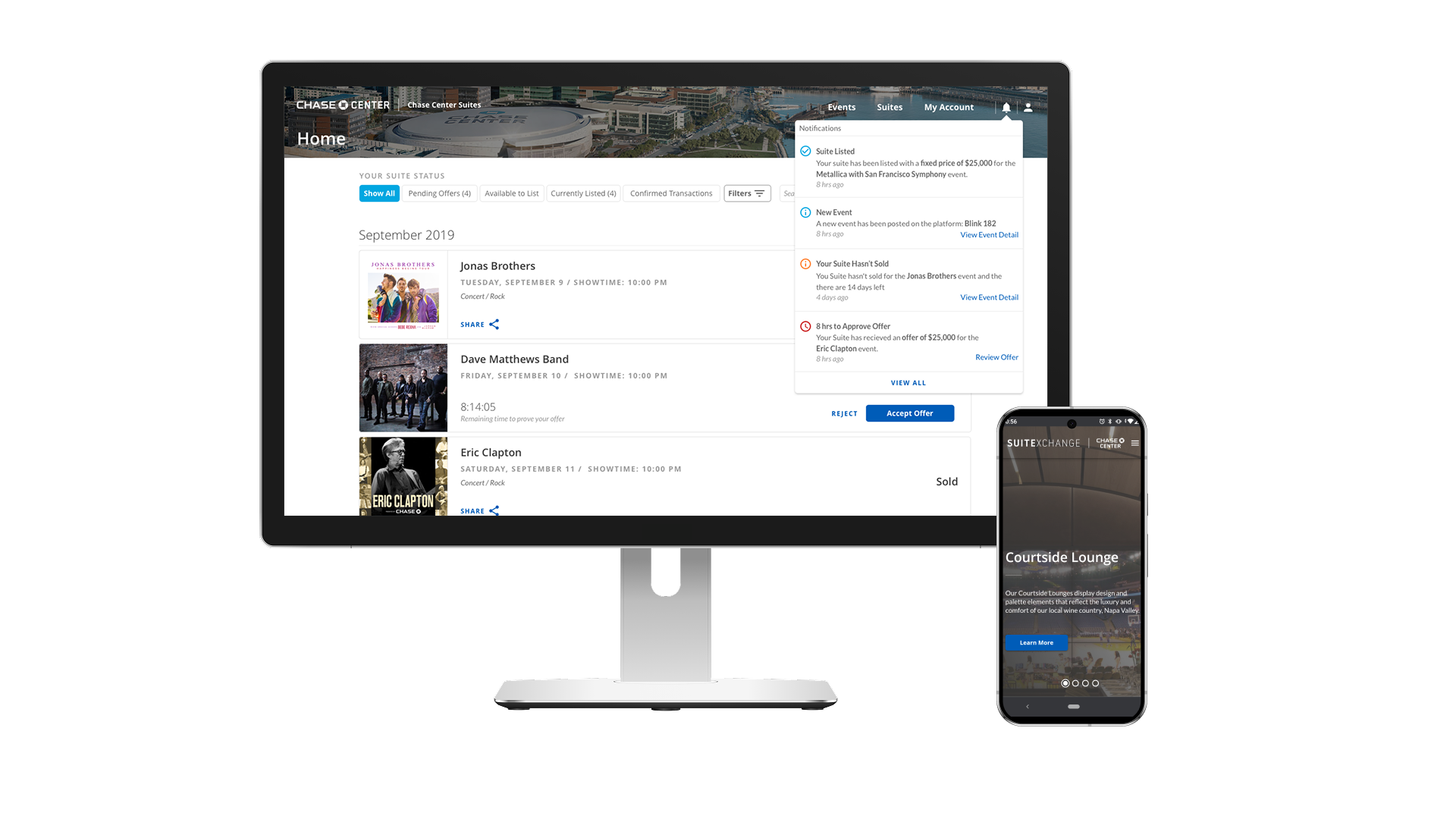

Design Process
Challenges
We had a fixed deadline and needed to move fast to have the platform ready before the opening so that owners could sell their suites. The project required delivering a responsive website and an out-of-scope CMS.
Workflow
With the arena opening locked in, the digital solution had a hard launch deadline. The lead engineer proposed a three-phase build that would add only visual design at the end, which risked skipping the user research and validation the project needed.
To align speed with quality, I reframed the plan into a phased and collaborative design process: designers and developers would work in parallel, surface technical constraints early, run lightweight tests on each iteration, and share regular progress with stakeholders. This approach kept us on schedule while still validating key flows with users to build the final experience.
Discovery
The discovery phase allowed us to understand the client's vision, review the competitor landscape, and perform quick research to learn more about users. We met with Chase Center stakeholders to clarify expectations, unpack business challenges, and map a “day in the life” journey for suite owners. At the same time, engineering explored technical constraints and feasibility in parallel.
To focus on the sections that would add the most value to the users and, consequently, the business, I proposed qualitative research to understand how suite owners and their delegates currently sell, share, and manage suites. Over the following weeks, the design team ran user interviews that surfaced a clear pattern: stakeholders aspired to a premium, end-to-end experience, which was already out of scope. Suite owners were time-poor, often delegating management to family members or assistants, and many avoided renting out suites because the effort outweighed the perceived return.
Interview results allowed us to define three core user groups, represented by seven personas, which I used throughout the project to guide design decisions and foster empathy amongst the client and our team.
These insights challenged initial stakeholder assumptions and directly shaped the platform model. We introduced roles like account admins and authorized guests so owners could safely delegate suite management, and ensured the experience respected their desire for a premium feel within the project’s time and scope constraints.
We also learned that the Chase Center sales team earned commissions by keeping the stadium full. Internally, they distributed the available suites to avoid offering the same property twice; therefore, the solution needed to support their existing workflows rather than replace them overnight.
User-Centered Scenario Building
Instead of presenting aesthetic screens to stakeholder to get their approval. We moved from proto-personas to writing user scenarios focused on user goals to build meaningful experiences fast. Pairing designers, engineers, and technical writers sparked collaboration and rapid iteration as we crafted future narratives where users achieve their objectives through technology. These scenarios helped communicate ideas clearly to clients and guided development planning.
The designers and I translated these scenarios into requirements and presented the result to the engineering team. By doing so, they were able to start planning the site's architecture, and we (designers) gained some time to design and test the screens.
To prepare the team to define the project's scope, I facilitated the creation of a User Story Map to visualize all potential features, break them into manageable pieces, and identify key touchpoints for creating the intended experience.
Simultaneously, the UI Designer collaborated with Brand and Marketing stakeholders to define the UI that embodied the brand's personality and resonated with target users. This parallel work kept stakeholders engaged and accelerated progress.
Collaborative and Iterative Design
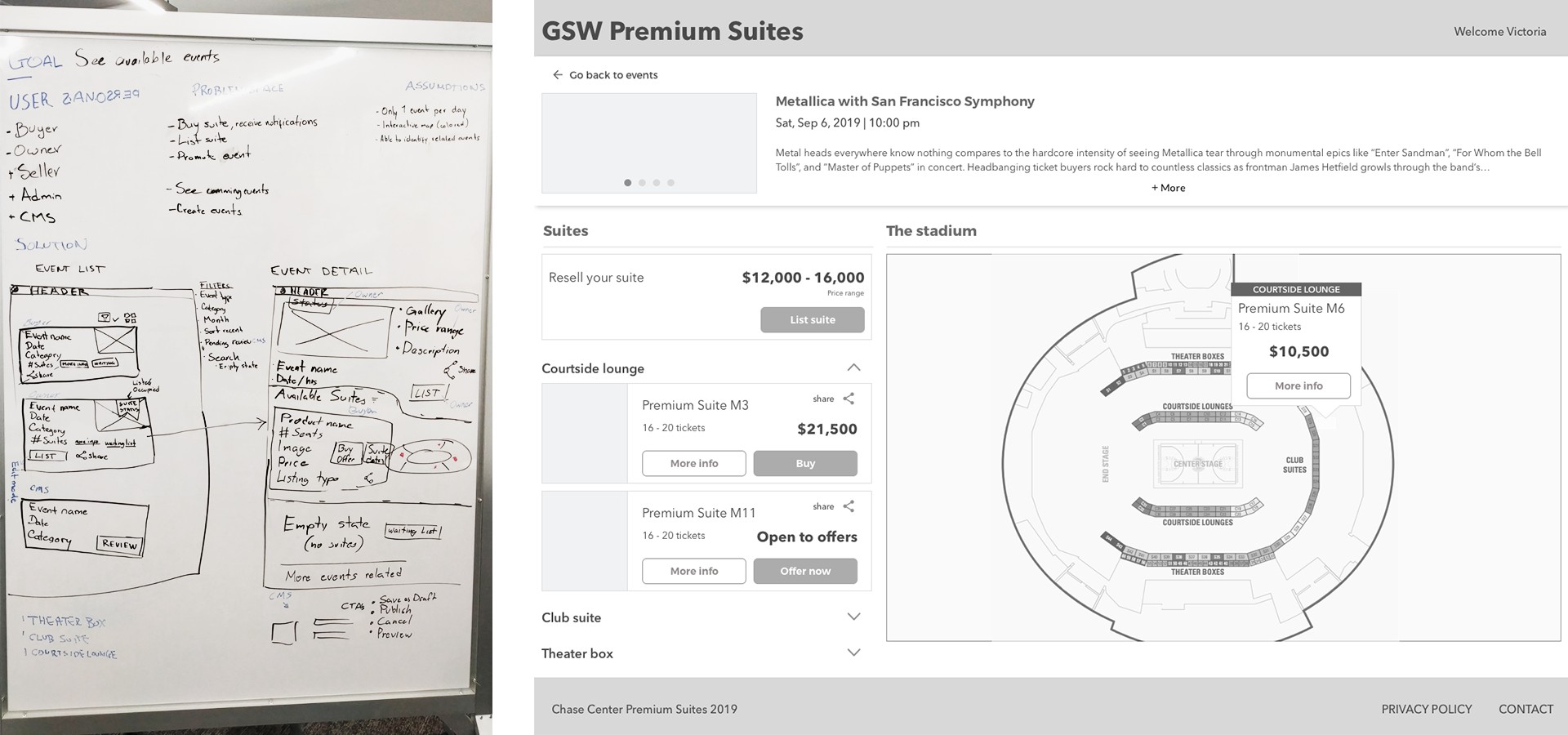
With a clear vision of the solution, the team needed to translate the requirement into a user interface. I planned weekly whiteboarding sessions with the engineers to continue providing visibility into the design process, hear their different perspectives, and identify technical constraints early. These sessions fostered developer engagement, accelerated progress, and gave the team a clear focus on the week’s upcoming screens and technical spikes.
Whiteboarding sessions served as the foundation for screen design. The other UX designer and I iterated on mid-fidelity wireframes. Engineering would next review them to flag constraints. Once ready, I presented bi-weekly updates to stakeholders, iterating further before handing designs to the UI Designer for visual polish and interaction refinement.
Usability Testing
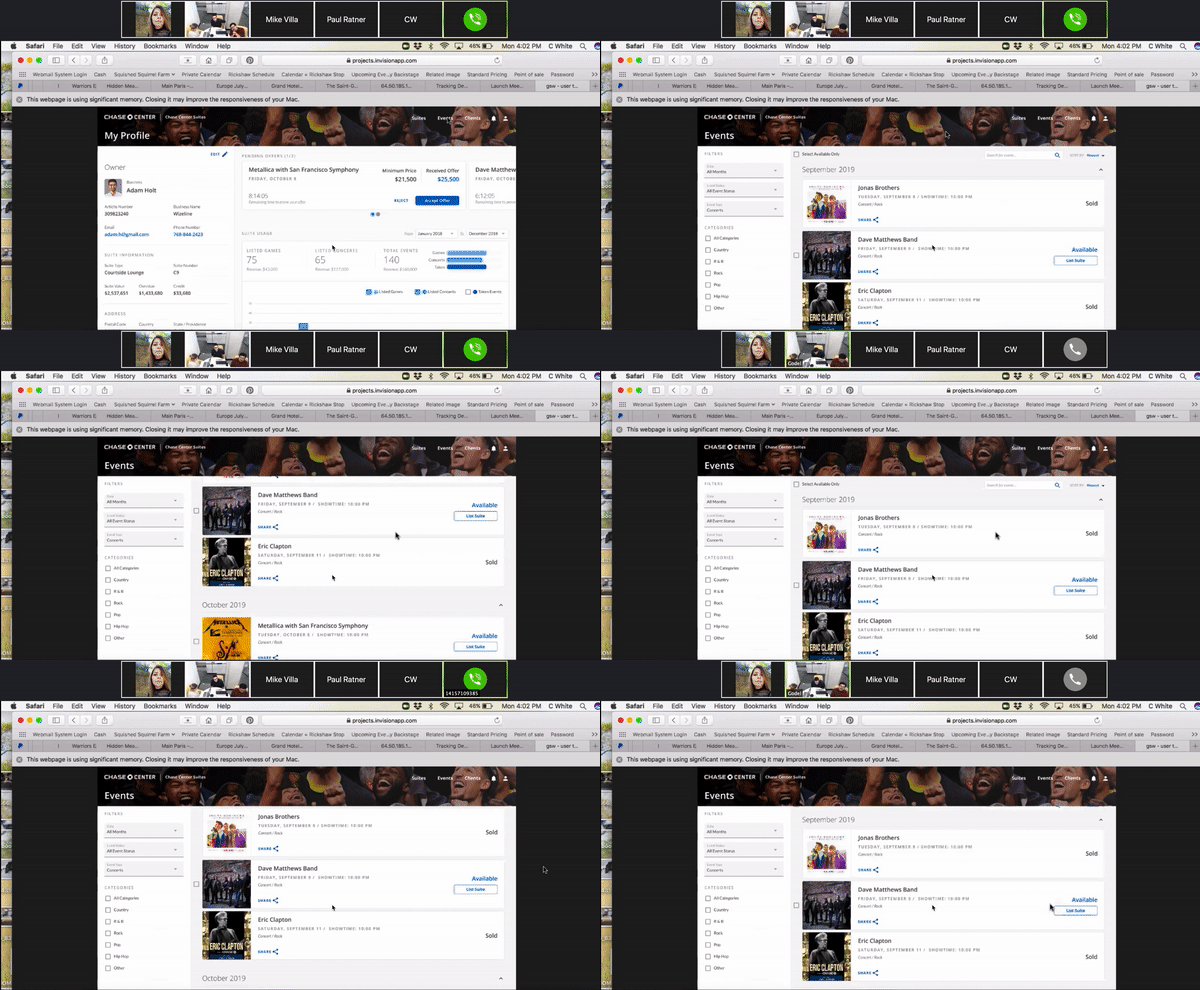
Given our user target, we knew we would have limited usability testing sessions, so the designers and I prioritized key flows to uncover major usability issues and evaluate the overall experience. While the visual designer prepared the prototype I defined the research objectives and worked on the script.
Participants wanted to learn quickly spotting suite benefits and locations, users ignored the dense paragraphs, focusing instead on icons with concise text, enabling rapid suite comparison. Based on this, we consolidated all the key information into digestible bullet points.
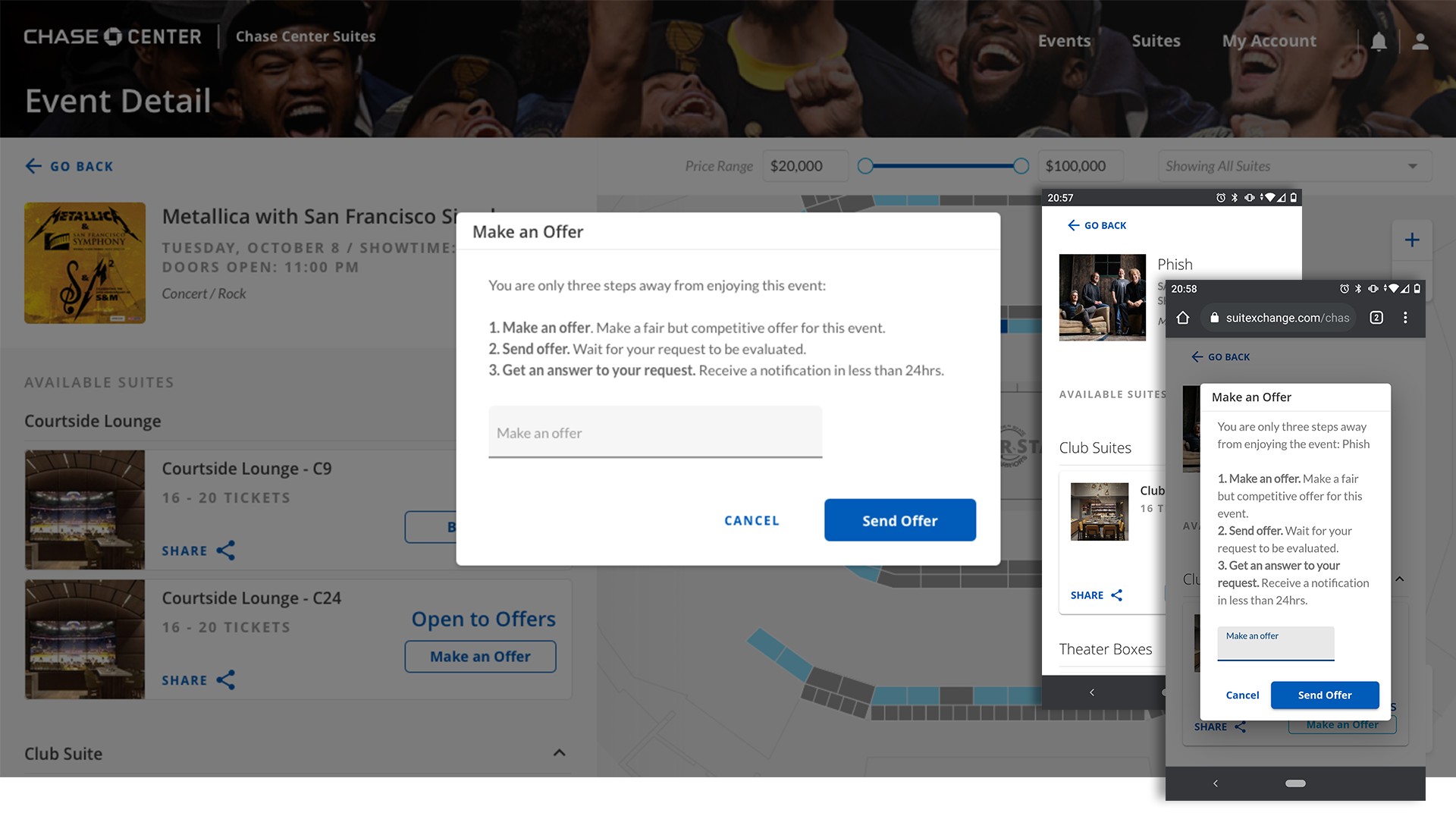
One of the riskiest hypotheses was that owners would benefit from bidding their suites, allowing owners to auction their suites. We believed that showing buyers the starting price and the last offer would boost demand and maximize profits, requiring only sellers to input a tag price. Stakeholders worried this might reduce typical bids. Though the project ended before live testing, this presented an exciting opportunity for future experimentation.

Other Projects
Coppel Case
→
Etsy Case
→
TalentLink Case
→


