Building Research Ops at Crunchtime

Building a unified research practice to inform product decisions
Anders brand wordmark in white placed on top of an image of a modern interior design.

As Crunchtime’s Senior Product Designer, I led the evolution of our research practice across Crunchtime product teams, centralizing fragmented insights from slide decks, call notes, and collaboration tools to empower product teams to prioritize features confidently.

Role: Lead Product Designer

Team: PM, Marketing, CSM, Design

The Problem

As research demand grew, our teams lacked a scalable way to turn customer conversations into decision‑ready insights.


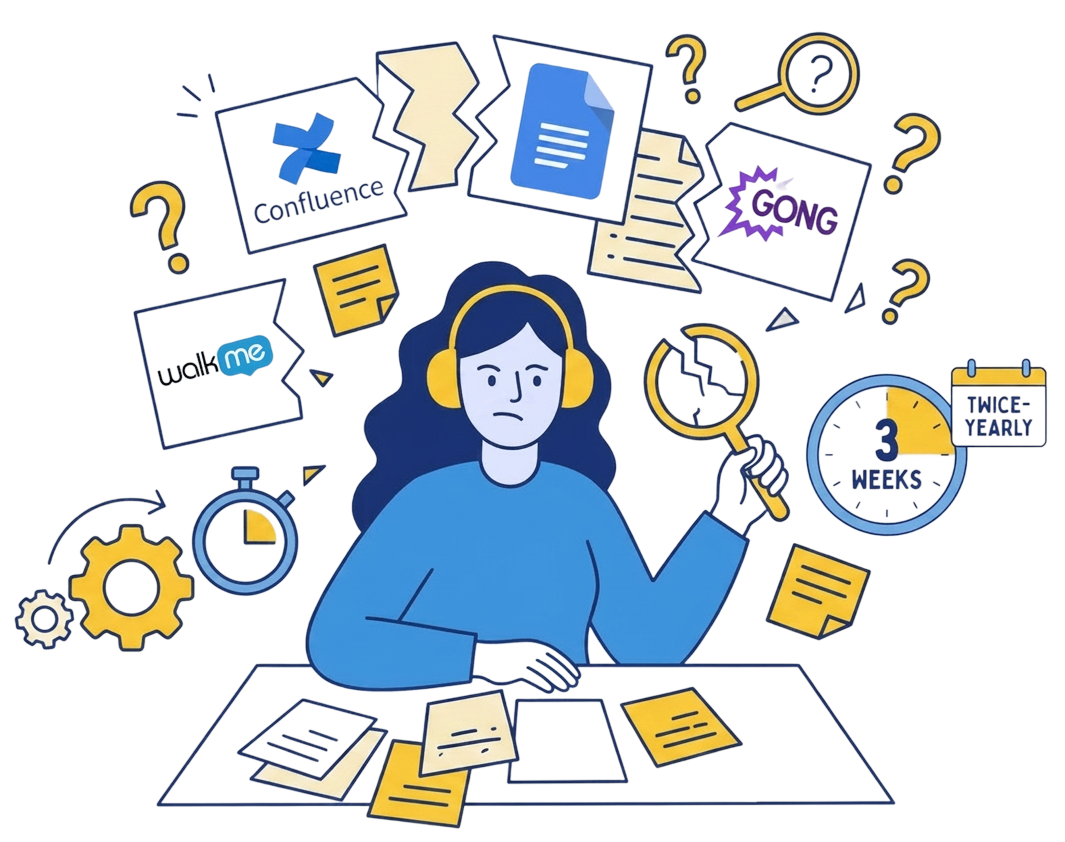
Fragmented tools and insights

Product designers ran and documented studies across 5 different tools, making insights hard to find and risking duplicated research.


Manual, inconsistent research operations

Designers manually took notes and created one‑off reports, slowing down synthesis and limiting how quickly each portfolio team could act on findings.


Slow user recruitment

Reaching customers required Customer Success Managers (CSMs) to coordinate calls, which could take around 3 weeks, or wait for twice-yearly site visits. This limited the team’s ability to do continuous discovery with prospects, current customers, and end users.

Actions

I pursued three key initiatives to build a scalable research system:


  1. Defined and implemented a unified research platform


  • I led a cross‑functional working group of Product Managers (PMs), Designers, and CSMs to evaluate research platforms for repository, panel management, and scheduling capabilities.​
  • I selected and implemented Great Question as our research system to consolidate study setup, panel management, scheduling, and a searchable repository.
  • Designers migrated ~12 hours of interview recordings (held during the past 6 months) into the repository in the first quarter, establishing a single source of truth for qualitative insights for two initiatives, TalentLink and Shared Analytics.


  1. Operational research workflows and standards


  • I created standardized templates (interview guides, synthesis formats) and a Research Playbook to reduce average analysis time through template reuse and AI-driven synthesis.
  • I introduced a shared taxonomy for tagging themes, enabling faster synthesis and cross‑study synthesis, and making insights discoverable.
  • Ran onboarding sessions along with my design peer, Yara, to help designers and PMs adopt the new workflows and contribute consistently to the repository documentation.


  1. Built and launched the first Customer Research Panel


  • Partnered with Customer Success, Marketing, and Product Management to define the first company‑wide Customer Panel, including naming, eligibility rules, and opt‑in flows.
  • Partnered with key stakeholders to define recruitment channels (ideas portal, webinars, email campaigns) and communication cadences to grow and maintain an engaged panel.


  1. Scaled insight sharing and design influence


  • Co-led a recurring forum with PMs, CSMs, and PM leadership to review panel performance and align on ways to scale the initiative
  • Designed and launched a lightweight customer insights newsletter to keep participants engaged and aware of the impact of their feedback in each of the Crucnhtime’s products.


Impact story


Repository data on TalentLink's Talent Development feature revealed recurring user friction during implementation and adoption. This insight led the team to pause the feature and redesign the workflow, resulting in better adoption and reduced support tickets.

Outcomes

Product impact


Insights from the repository informed 10+ roadmap decisions within the first 6 months, contributing to roadmap prioritization, feature testing, and improving adoption.

3x increase in research participation


About 75 customers across 5 Crunchtime products joined the panel within 4 months, enabling continuous discovery and usability testing cycles.

Faster access to customers


Average participant scheduling time dropped from 3 weeks to 1.2 weeks, freeing CSMs and enabling PMs and designers to validate assumptions earlier in the product cycle.

Higher‑quality, reusable insights


Standardized templates and delivered a searchable repository, eliminating duplicated research and enabling a searchable cross-product repository, and cut analysis time by 30%, freeing teams to focus on actionable insights.

Icons

Case Studies

Mobile e-commerce app screens from Coppel showing interfaces of product listings, shopping cart, purchase summary, and account sign-in arranged in an angled layout

Coppel Project

Management dashboard screen preview for Chase Center Premium Suites displayed over a blurred background of an upscale dining table and arena seating

Chase Center Suites Project

Icons

CONTACT

c.ivonne.diaz@gmail.com

SOCIAL

LinkedIn

Behance

Building Research Ops at Crunchtime

Building a unified research practice to inform product decisions

Anders brand wordmark in white placed on top of an image of a modern interior design.

As Crunchtime’s Senior Product Designer, I led the evolution of our research practice across Crunchtime product teams, centralizing fragmented insights from slide decks, call notes, and collaboration tools to empower product teams to prioritize features confidently.

Role: Lead Product Designer

Team: PM, Marketing, CSM, Design

The Problem

As research demand grew, our teams lacked a scalable way to turn customer conversations into decision‑ready insights.


Fragmented tools and insights

Product designers ran and documented studies across 5 different tools, making insights hard to find and risking duplicated research.


Manual, inconsistent research operations

Designers manually took notes and created one‑off reports, slowing down synthesis and limiting how quickly each portfolio team could act on findings.


Slow user recruitment

Reaching customers required Customer Success Managers (CSMs) to coordinate calls, which could take around 3 weeks, or wait for twice-yearly site visits. This limited the team’s ability to do continuous discovery with prospects, current customers, and end users.

Actions

I pursued three key initiatives to build a scalable research system:


  1. Defined and implemented a unified research platform


  • I led a cross‑functional working group of Product Managers (PMs), Designers, and CSMs to evaluate research platforms for repository, panel management, and scheduling capabilities.​
  • I selected and implemented Great Question as our research system to consolidate study setup, panel management, scheduling, and a searchable repository.
  • Designers migrated ~12 hours of interview recordings (held during the past 6 months) into the repository in the first quarter, establishing a single source of truth for qualitative insights for two initiatives, TalentLink and Shared Analytics.


  1. Operational research workflows and standards


  • I created standardized templates (interview guides, synthesis formats) and a Research Playbook to reduce average analysis time through template reuse and AI-driven synthesis.
  • I introduced a shared taxonomy for tagging themes, enabling faster synthesis and cross‑study synthesis, and making insights discoverable.
  • Ran onboarding sessions along with my design peer, Yara, to help designers and PMs adopt the new workflows and contribute consistently to the repository documentation.


  1. Built and launched the first Customer Research Panel


  • Partnered with Customer Success, Marketing, and Product Management to define the first company‑wide Customer Panel, including naming, eligibility rules, and opt‑in flows.
  • Partnered with key stakeholders to define recruitment channels (ideas portal, webinars, email campaigns) and communication cadences to grow and maintain an engaged panel.


  1. Scaled insight sharing and design influence


  • Co-led a recurring forum with PMs, CSMs, and PM leadership to review panel performance and align on ways to scale the initiative
  • Designed and launched a lightweight customer insights newsletter to keep participants engaged and aware of the impact of their feedback in each of the Crucnhtime’s products.


Impact story


Repository data on TalentLink's Talent Development feature revealed recurring user friction during implementation and adoption. This insight led the team to pause the feature and redesign the workflow, resulting in better adoption and reduced support tickets.

Outcomes

Product impact


Insights from the repository informed 10+ roadmap decisions within the first 6 months, contributing to roadmap prioritization, feature testing, and improving adoption.

3x increase in research participation


About 75 customers across 5 Crunchtime products joined the panel within 4 months, enabling continuous discovery and usability testing cycles.

Faster access to customers


Average participant scheduling time dropped from 3 weeks to 1.2 weeks, freeing CSMs and enabling PMs and designers to validate assumptions earlier in the product cycle.

Higher‑quality, reusable insights


Standardized templates and delivered a searchable repository, eliminating duplicated research and enabling a searchable cross-product repository, and cut analysis time by 30%, freeing teams to focus on actionable insights.

Icons

Case Studies

Mobile e-commerce app screens from Coppel showing interfaces of product listings, shopping cart, purchase summary, and account sign-in arranged in an angled layout

Coppel Project

Management dashboard screen preview for Chase Center Premium Suites displayed over a blurred background of an upscale dining table and arena seating

Chase Center Suites Project

Icons

CONTACT

c.ivonne.diaz@gmail.com

SOCIAL

LinkedIn

Behance

Building Research Ops at Crunchtime

Building a unified research practice to inform product decisions

Anders brand wordmark in white placed on top of an image of a modern interior design.

As Crunchtime’s Senior Product Designer, I led the evolution of our research practice across Crunchtime product teams, centralizing fragmented insights from slide decks, call notes, and collaboration tools to empower product teams to prioritize features confidently.

Role: Lead Product Designer

Team: PM, Marketing, CSM, Design

The Problem

As research demand grew, our teams lacked a scalable way to turn customer conversations into decision‑ready insights.


Fragmented tools and insights

Product designers ran and documented studies across 5 different tools, making insights hard to find and risking duplicated research.


Manual, inconsistent research operations

Designers manually took notes and created one‑off reports, slowing down synthesis and limiting how quickly each portfolio team could act on findings.


Slow user recruitment

Reaching customers required Customer Success Managers (CSMs) to coordinate calls, which could take around 3 weeks, or wait for twice-yearly site visits. This limited the team’s ability to do continuous discovery with prospects, current customers, and end users.

Actions

I pursued three key initiatives to build a scalable research system:


  1. Defined and implemented a unified research platform


  • I led a cross‑functional working group of Product Managers (PMs), Designers, and CSMs to evaluate research platforms for repository, panel management, and scheduling capabilities.​
  • I selected and implemented Great Question as our research system to consolidate study setup, panel management, scheduling, and a searchable repository.
  • Designers migrated ~12 hours of interview recordings (held during the past 6 months) into the repository in the first quarter, establishing a single source of truth for qualitative insights for two initiatives, TalentLink and Shared Analytics.


  1. Operational research workflows and standards


  • I created standardized templates (interview guides, synthesis formats) and a Research Playbook to reduce average analysis time through template reuse and AI-driven synthesis.
  • I introduced a shared taxonomy for tagging themes, enabling faster synthesis and cross‑study synthesis, and making insights discoverable.
  • Ran onboarding sessions along with my design peer, Yara, to help designers and PMs adopt the new workflows and contribute consistently to the repository documentation.


  1. Built and launched the first Customer Research Panel


  • Partnered with Customer Success, Marketing, and Product Management to define the first company‑wide Customer Panel, including naming, eligibility rules, and opt‑in flows.
  • Partnered with key stakeholders to define recruitment channels (ideas portal, webinars, email campaigns) and communication cadences to grow and maintain an engaged panel.


  1. Scaled insight sharing and design influence


  • Co-led a recurring forum with PMs, CSMs, and PM leadership to review panel performance and align on ways to scale the initiative
  • Designed and launched a lightweight customer insights newsletter to keep participants engaged and aware of the impact of their feedback in each of the Crucnhtime’s products.


Impact story


Repository data on TalentLink's Talent Development feature revealed recurring user friction during implementation and adoption. This insight led the team to pause the feature and redesign the workflow, resulting in better adoption and reduced support tickets.

Outcomes

Product impact


Insights from the repository informed 10+ roadmap decisions within the first 6 months, contributing to roadmap prioritization, feature testing, and improving adoption.

3x increase in research participation


About 75 customers across 5 Crunchtime products joined the panel within 4 months, enabling continuous discovery and usability testing cycles.

Faster access to customers


Average participant scheduling time dropped from 3 weeks to 1.2 weeks, freeing CSMs and enabling PMs and designers to validate assumptions earlier in the product cycle.

Higher‑quality, reusable insights


Standardized templates and delivered a searchable repository, eliminating duplicated research and enabling a searchable cross-product repository, and cut analysis time by 30%, freeing teams to focus on actionable insights.

Icons

Case Studies

Mobile e-commerce app screens from Coppel showing interfaces of product listings, shopping cart, purchase summary, and account sign-in arranged in an angled layout

Coppel Project

Management dashboard screen preview for Chase Center Premium Suites displayed over a blurred background of an upscale dining table and arena seating

Chase Center Suites Project